

Files
Download Poster (14.4 MB)
Student Class
2029
Student Affiliation
WISP Intern
First Advisor
Adithya Pediredla
First Advisor Department
Department of Computer Science
Second Advisor
Quinton Qu
Second Advisor Department
Department of Computer Science
Abstract
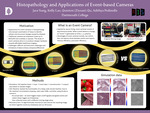
Capturing and analyzing visual phenomena at their natural time scale is critical in both science and engineering. For instance, in industrial manufacturing, high-speed capture of defects and crack propagation ensures quality control. In sports, capturing high-impact collisions in football or rugby helps in better understanding injury mechanisms and developing more effective prevention strategies. In autonomous robotics, drones, and cars, high-speed cameras enable split-second decisions, even during fast maneuvers. However, high-speed cameras are expensive, costing upwards of $100,000, and are bulky, limiting their widespread adoption. Recently, event cameras have emerged as an affordable, small-form-factor alternative, but they only capture binary temporal differences of the scene in the form of events. Reconstructing the high-speed scene from events is non-trivial and ill-posed. The focus of the research will be on co-designing hardware and reconstruction algorithms enabling the capture of rich information about the scene, a field known as computational imaging/photography. This may include designing and building optical hardware prototypes to capture additional information about the scene, developing ,and coding the reconstruction algorithms, or exploring various applications of high-speed imaging.
Publication Date
2026
Dartmouth Digital Commons Citation
Sung, Jace; Lao, Kelly; Qu, Quinton; and Pediredla, Adithya, "Histopathology and applications of event-based cameras" (2026). Wetterhahn Science Symposium Posters. 3.
https://digitalcommons.dartmouth.edu/wetterhahnsymposiumposters/3
