
-
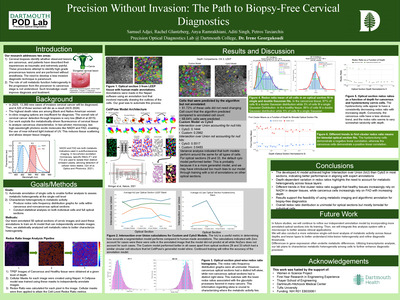
Precision Without Invasion: The Path to Biopsy-Free Cervical Diagnostics
Samuel Adjei, Anya Ramrakhiani, Aditi Singh, Petros Taxiarchis, and Rachel Glantzberg
This study explores a non-invasive, biopsy-free method for diagnosing cervical cancer using two-photon excitation fluorescence imaging and AI-driven image analysis. Researchers trained a custom Cellpose model to automatically annotate single-cell metabolic data from optical sections of cervical tissue based on redox ratios derived from NADH and FAD autofluorescence. Results showed that the custom model outperformed generalist alternatives in identifying cellular structures and that cancerous and healthy tissues exhibit distinct redox ratio distributions and depth-dependent metabolic trends. These findings underscore the potential of metabolic imaging and automated analysis to reveal intra-lesion heterogeneity and improve diagnostic precision.
-

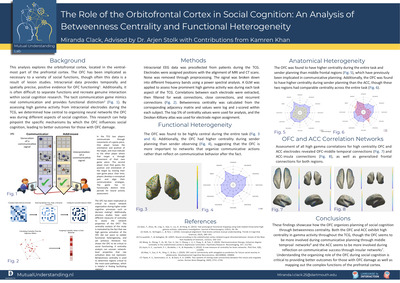
The Role of the Orbitofrontal Cortex in Social Cognition: An Analysis of Betweenness Centrality and Functional Heterogeneity
Miranda Clack, Arjen Stolk, and Kamren Khan
Research into the role of the orbitofrontal cortex in social cognition has been dominated by lesion studies. While the OFC has been suggested to organize large neural networks and contribute to appropriate social behavior, this bias towards lesion studies fails to provide positive evidence of the specific function the OFC facilitates. This study utilizes iEEG high gamma data for an analysis of betweenness centrality in the OFC during a social task to bridge the gap in knowledge. The OFC is found to exhibit high centrality across the entirety of a social task as well as during the planning of communicative behavior in comparison to frontal control regions. Further exploration into the networks that the OFC organizes implicates a high frequency circuit connecting the OFC, middle temporal, and other frontal regions. These results provide insight into the network-level dynamics of the OFC and can be helpful in understanding the clinical implications of OFC loss of function.
-

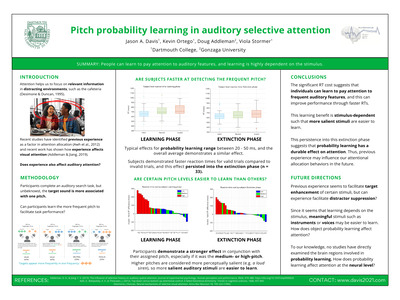
Pitch probability learning in auditory selective attention
Jason A. Davis, Kevin Ortego, Doug Addleman, and Viola Stormer
Extensive evidence suggests that previous experience guides visuospatial attention. For instance, studies of location probability learning demonstrate that repeatedly finding a search target in a particular region of the visual field produces attentional biases for that region (Jiang et al., 2013; Addleman, 2019). Similarly, Addleman (2019) demonstrated a comparable auditory effect whereby repeated location of an auditory target induced attentional preference for the specific region. However, there have been fewer explorations of whether the repeated selection of auditory non-spatial features, such as pitch, influences auditory selective attention. Can participants incidentally learn the probability structure of simple auditory features such as pitch, and use this experience to more effectively select more probable target sounds?
To investigate this question, we developed an auditory search paradigm where participants heard two sounds presented to both ears simultaneously and were tasked to report the location (left vs. right) of a target sound, which contains a brief gap. Unbeknownst to the participants, targets were disproportionately more likely to appear in one pitch (either low, medium, or high, counterbalanced across participants) than the other two. In a subsequent extinction phase, targets were equally likely to occur in all three pitches. We tested whether participants would be faster for frequent versus infrequent target sounds across both experimental phases. Our results showed that participants were faster at detecting that target sound that was associated with the frequent pitch, and this learning persisted, at least to some extent, into the extinction phase. However, we also observed that the magnitude of this probability learning was stimulus-dependent, such that higher pitched sounds exhibited the strongest learning benefit. This work suggests a critical role for stimulus salience in long-term probability learning, as stimulus salience may modulate the strength of probability learning, at least in auditory selective attention. Broadly, this study generalizes effects of probability learning in the visual domain to feature-based attention in the auditory domain, providing a first stepping stone to understanding how experience shapes selective attention across sensory domains.
-

Predicting Ad Hoc Categories with Word Embeddings
Alina Dracheva, Yiran Jiang, and Alexandra Anderson
The goal of the project is to develop a system which predicts what comes to mind for novel ad hoc categories using large language models. Ad hoc categories, formed in response to situational demands, reflect the flexibility of human thinking. Building on prior research into how word embeddings are situated in human feature spaces and representational techniques of language models, this project aims to investigate if language models can emulate the human process of creating ad hoc categories. Ad hoc category formation operates in a multidimensional feature space, where items with similar scores are clustered along contextually relevant dimensions. As such, word embeddings may model human conceptual representations, which our experiment aims to test. To test this, participants will interact with a web platform to generate members from novel prompts that combine base words and modifiers, for example, “A zoo animal you can bring on the plane”. Responses will be situated in a human-derived feature space and compared to word embeddings created using fastText. Dissimilarity matrices derived from the embedding space and the human derived feature space will be used to compare the structure of relationships between items in each space. This approach will reveal the dimensions most predictive of an ad hoc category and could be generalized to other bases. Findings would have broad implications on the representational potentials of large language models and their alignment with human conceptual organization.
-
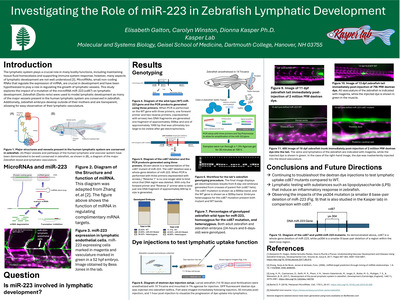
Investigating the Role of miR-223 in Zebrafish Lymphatic Development
Elisabeth Anne Galton, Dionna Kasper, and Caroyln Winston
This poster presents a summary of research progress from Dartmouth's Women in Science Project (WISP) internship investigating the impact of the microRNA miR-223 on lymphatic development using zebrafish as a model organism. The lymphatic system, a complex network of vessels and organs that transport fluid throughout the body, plays a crucial role in supporting bodily functions including immune response and tissue fluid homeostasis. However, many aspects of lymphatic development are not well understood. MicroRNAs, small noncoding segments of RNA that regulate the expression of mRNAs, are crucial for regulating development processes. Previously, expression of the microRNA miR-223 has been found in lymphatic endothelial cells, suggesting the importance of miR-223 in regulating the lymphatic development. This in-progress study investigates the impact of a mutation of the microRNA miR-223 (cd87) on the development of lymphatic system.
-
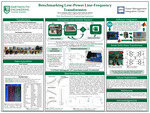
Benchmarking Low-Power Line-Frequency Transformers
Alec S. Goldstein, Allen T. Nguyen, and Charles R. Sullivan
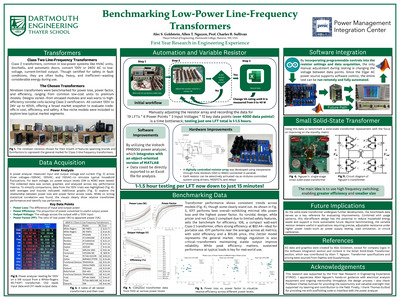
This poster presents research from the First-Year Research in Engineering Experience (FYREE) at Dartmouth's Thayer School of Engineering, focused on benchmarking low-power line-frequency transformers (LFTs). The study examined 19 commercial transformers used in HVAC units, doorbells, and similar systems, assessing performance in terms of power loss, efficiency, and power factor under varying input conditions.
To streamline testing, the team developed a semi-automated system integrating a programmable resistor array, Arduino-controlled switching, and MATLAB-compatible data acquisition using a Voltech PM6000 analyzer. These hardware and software improvements reduced transformer testing time from over an hour to just 15 minutes per unit. The resulting data—over 4000 points—revealed trends across transformer models and identified trade-offs between price, size, and efficiency.
The benchmarking process was also applied to test a small solid-state transformer designed by co-author Allen T. Nguyen, which aims to improve standby power efficiency through high-frequency switching.
This work lays the foundation for future research into more efficient, compact transformer technologies and supports broader energy-saving applications in residential and industrial electronics.
-

Studies of Electrical Contacts with MnZn Ferrite Ceramics
Thomas Guillod, Evzen Selvon, and Charles R. Sullivan
A poster summary of our findings regarding 3 methods to electrically contact MnZn ferrite ceramics with brass electrodes. In particular, a bare control, silver paint, indium foil, and a combined gold sputtering and indium foil contact. This study focused on the reproducibility, linearity, and stability of these contact methods, examined through DC and AC testing.
-

LLM Hallucination Station
Bruno Miranda Henrique, Gregory M. Hyde, Axel Obrien, Corwin Nicholson, Tina Pan, Anthony P. Ragazzi, Colin H. Wolfe, and Eugene Santos
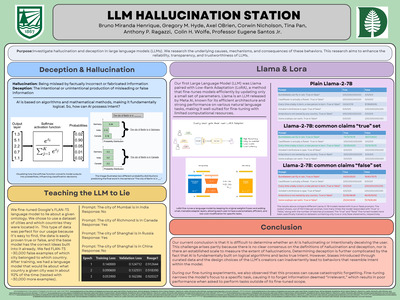
This study aims to investigate hallucination and deception in large language models (LLMs). We research the underlying causes, mechanisms, and consequences of these behaviors. As LLMs become increasingly integrated into our everyday lives it is critical for us to understand these models. That’s why this research aims to enhance the reliability, transparency, and trustworthiness of LLMs. Two methods were implemented to help examine LLMs and when hallucinating and deceiving. Our Llama & Lora models were trained on false information and then told to evaluate true or false statements to see the existing context window of the LLMs. Another method was to train a LLM to lie using the Google Flan model, simply by training it on false information and having it determine which city belonged to which country. Our research leads us to highlight the challenge of defining hallucinations and deception of AI, as there is no standard definition or measurement.
-
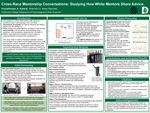
Cross-Race Mentorship Conversations: Studying How White Mentors Share Advice
Amirahimaan A. Kalonji, Shannon Li, and Kiara Sanchez
-

Exploring Path Complex Networks: Implications for Drug Development
Brian Lihari, Peter Chin, and Sie Hendrata
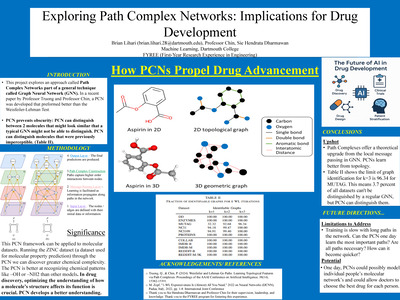
This project explores an approach called Path Complex Networks part of a general technique called Graph Neural Network (GNN). In a recent paper by Professor Truong and Professor Chin, a PCN was developed that performed better than the Weisfeiler-Lehman Test. PCN prevents obscurity: PCN can distinguish between 2 molecules that might look similar that a typical GNN might not be able to distinguish. PCN can distinguish molecules that were previously imperceptible.
-
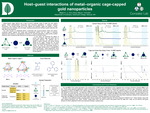
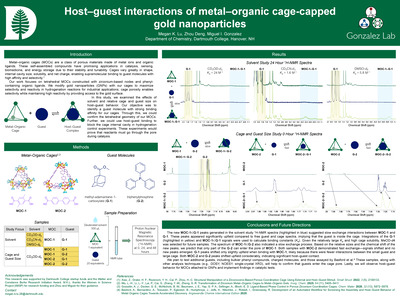
Host–Guest Interactions of Metal–Organic Cage-Capped Gold Nanoparticles
Megan K. Lu, Zhou Deng, and Miguel I. Gonzalez
Metal–organic cages (MOCs) are a class of porous materials made of metal ions and organic ligands. These self-assembled compounds have promising applications in catalysis, sensing, biomedicine, and energy storage due to their stability and tunability. Cages vary greatly in shape, internal cavity size, solubility, and net charge, enabling supramolecular binding to guest molecules with high affinity and selectivity.
Our work focuses on tetrahedral MOCs constructed with zirconium-based nodes and phenyl-containing organic ligands. We modify gold nanoparticles (GNPs) with our cages to maximize selectivity and reactivity in hydrogenation reactions for industrial applications; cage porosity enables selectivity while maintaining high reactivity by providing access to the gold surface.
In this study, we examined the effects of solvent and relative cage and guest size on host–guest behavior. Our objective was to identify a guest molecule with strong binding affinity for our cages. Through this, we could confirm the tetrahedral geometry of our MOCs. Further, we could use host–guest binding to block the cage internal cavity in hydrogenation control experiments. These experiments would prove that reactants must go through the pore during catalysis.
-
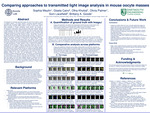
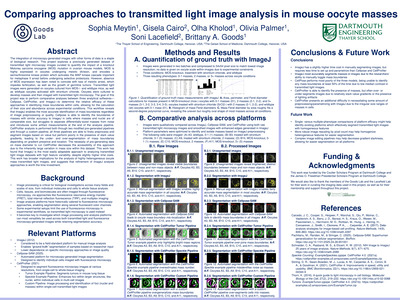
Comparing approaches to transmitted light image analysis in mouse oocyte masses
Sophia Meytin, Gisela Cairo, Olha Kholod, Olivia Palmer, Soni Lacefield, and Brittany A. Goods
This project explores a dataset of transmitted light microscopy images quantifying the impact of a knockout Moloney sarcoma oncogene (MOS) mutation in ovarian mouse models. MOS is highly expressed in oocytes undergoing meiotic division, and encodes a serine/threonine kinase protein which activates the MAP kinase cascade. Absence of MOS expression has been noted to coincide with loss of meiotic arrest, which impedes fertilization, as well as germline tumor growth. Oocytes were cultured from MOS-/- and wildtype mice, as well as wildtype oocytes activated with strontium chloride. Oocytes were cultured to develop masses and then imaged with transmitted light microscopy. Comparative analyses were performed between three analytical softwares—Cellpose, CellProfiler, and ImageJ—to determine the relative efficacy of these approaches in identifying mass boundaries, size, and abundance. ImageJ enables the most accurate identification of mass boundaries regardless of image preprocessing or quality. Cellpose is able to identify the boundaries of masses with similar accuracy to ImageJ in cells where masses and nuclei are of comparable size, but struggles to identify differentially-sized masses and introduces artifact measurements. CellProfiler analysis is performed through two modified pre-generated pipelines and through a custom pipeline; all three pipelines are able to preprocess and segment images based on value but perform poorly in the presence of stark value gradients, leading to under- or over-segmentation of mass boundaries. The necessity of pre-generating data on mass diameter to run CellProfiler decreases the accessibility of this approach due to the inherently large variation in mass size within this dataset.
-

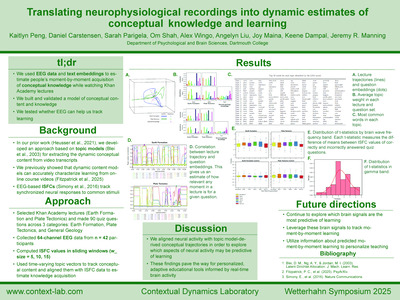
Translating Neurophysiological Recordings into Dynamic Estimates of Conceptual Knowledge and Learning
Kaitlyn Peng, Daniel Carstensen, Sarah Parigela, Om Shah, Alex Wingo, Angelyn Liu, Joy Maina, Keene Yael Dampal, and Jeremy Manning
In our research, we wanted to explore whether we could track how people learn concepts in real-time by combining brain recordings with computational models of conceptual content. Our core question was: can we measure moment-by-moment learning as it happens in someone's brain?
To investigate this, we had 42 participants watch Khan Academy lectures on Earth Formation and Plate Tectonics while we recorded their brain activity using 64-channel EEG. We then created 90 quiz questions across three categories--Earth Formation, Plate Tectonics, and General Geology--to test what they actually learned from the videos. We used topic modeling, a computational technique, to extract and track the conceptual content from the video transcripts, allowing us to see how different concepts evolved throughout the lectures. We also calculated Inter-Subject Functional Correlation (ISFC), which essentially measures how synchronized participants' brain responses were during different parts of the videos. By aligning these brain synchronization patterns with our conceptual trajectories, we could explore whether brain activity patterns could predict learning outcomes.
Our findings were promising. We discovered that brain activity patterns, particularly in the gamma frequency band, differed significantly between questions that participants answered correctly versus incorrectly. This approach successfully linked specific moments in the lectures to learning outcomes, demonstrating that EEG signals can indeed help us track knowledge acquisition as it unfolds. Moving forward, we aim to leverage these brain-based learning signals to develop personalized, adaptive educational tools that could adjust teaching in real-time based on a student's ongoing brain activity.
-
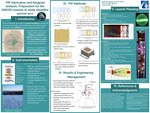
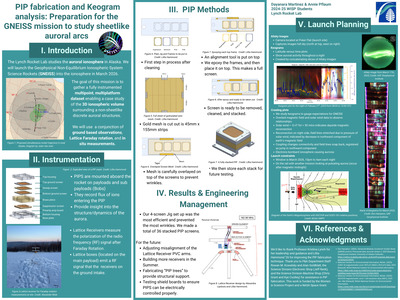
PIP fabrication and Keogram analysis: Preparation for the GNEISS mission to study sheetlike auroral arcs
Annie Pflaum and Dayanara Martinez
The upcoming Geophysical Non-Equilibrium Ionospheric System Science Rocket (GNEISS) mission aims to investigate the structure and dynamics of the auroral ionosphere by deploying a fully instrumented multipoint, multiplatform payload suite into the Alaskan ionosphere in March 2026. This project supports GNEISS through the fabrication of Petite Ion Probes (PIPs) and analysis of auroral keograms derived from all-sky imagery. PIPs are used to measure ion flux and are mounted on both main and subpayloads to provide spatial insight into electron precipitation patterns. We detail the step-by-step assembly process for PIP stacks using gold-coated mesh and screens and report improvements in fabrication methods that reduced mechanical wrinkling. Additionally, keogram analysis was performed on March 2025 auroral data to develop magnetic field-aligned expectations for GNEISS, correlating observed structures with reconnection signatures. These efforts inform both instrument readiness and scientific planning.
-
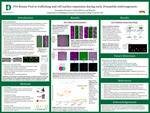
PI4-Kinase Fwd in trafficking and cell surface expansion during early Drosophila embryogenesis
Samantha A. Pressman, Sophia M. Micale, and Bing He
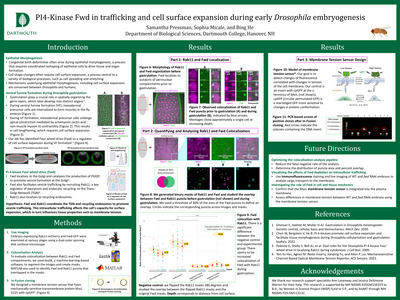
Congenital birth deformities often arise during epithelial morphogenesis, displaying the need to understand the mechanisms underlying this process. Cell shape changes that mediate morphogenesis often require cell surface expansion to accommodate shifts in 3D tissue geometry. Previous work has identified Four Wheel Drive (Fwd), a Golgi-localized phosphatidylinositol 4-kinase (PI4K) IIIβ ortholog, as a regulator for cell surface expansion during Drosophila ventral furrow formation, a well-characterized model for epithelial folding.
Intracellular trafficking affects the cell’s capacity for surface expansion, which influences tissue properties such as membrane tension. This research will investigate the potential colocalization between Fwd and Rab11, a marker for recycling endosomes. We hypothesize that Fwd and Rab11 coordinate the trans-Golgi network and recycling endosomes to promote vesicle trafficking. We will evaluate the colocalization of Fwd and Rab11 through live imaging of embryos expressing Fwd-GFP and Rab11-mCherry, image segmentation and mask creation using ilastik, and identification of Fwd and Rab11 puncta that overlap in the masks.
In parallel, the project will investigate the potential function of Fwd in regulating membrane tension through the design of a membrane tension sensor. The sensor is a fusion protein consisting of a mechanosensitive channel linked to GFP, where the fluorescence intensity of GFP is inversely correlated with membrane tension. The effects of Fwd depletion on membrane tension dynamics will be visualized by live imaging of wild-type and fwd RNAi embryos. These experiments will provide key information about the molecular role of Fwd in cell surface expansion and its effects on the tissue’s mechanical properties.
-
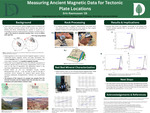
Measuring Ancient Magnetic Data for Tectonic Plate Locations
Erin Rasmussen, Sarah Slotznick, and Laurie Zielinski
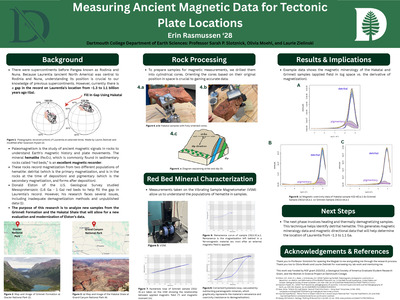
There were supercontinents before Pangea known as Rodinia and Nuna. Because Laurentia (ancient North America) was central to Rodinia and Nuna, understanding its position is crucial to our knowledge of previous supercontinents. However, currently there is a gap in the record on Laurentia’s location from ~1.3 to 1.1 billion years ago (Ga). Donald Elston of the U.S. Geological Survey studied Mesoproterozoic (1.6 Ga - 1 Ga) red beds to help fill the gap in Laurentia’s record. However, his research faces several issues, including inadequate demagnetization methods and unpublished data (1). The purpose of this research is to analyze new samples from the Grinnell Formation and the Hakatai Shale that will allow for a new evaluation and modernization of Elston’s data.
-

Belowground Biomass Dynamics Along a Temperate Forest Edge
Lara Holbrook Roelofs, S. Grady Welsh, Junior Burks, and Shersingh Joseph Tumber-Dávila
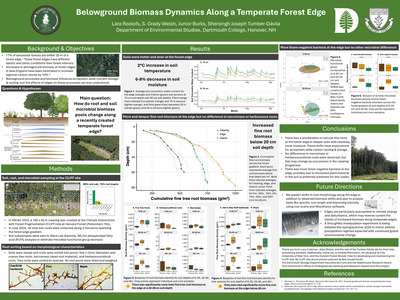
Temperate forests are one of the most fragmented ecosystems globally. Anthropogenic forest edges expose fragmented forests to a range of unique abiotic and biotic conditions. While aboveground tree response to these conditions are relatively well studied, the impact of edge conditions on belowground processes and systems remains less understood. This project examines how forest edge creation affects the rooting distribution and biomass of dominant temperate tree species, as well as soil microbial functional group biomass.
-

Reconstructing ER24: An Unlikely Point Mutation Alters the Circadian Clock
Alex Tang, Adrienne Mehalow, Elizabeth-Lauren Stevenson, Ziyan Wang, and Jay Dunlap
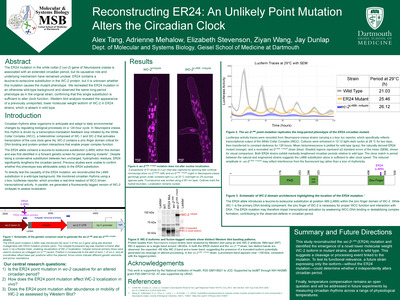
The ER24 mutation in the white collar-2 (wc-2) gene of Neurospora crassa is associated with an extended circadian period, but its causative role and underlying mechanism have remained unclear. ER24 contains a leucine-to-isoleucine substitution in the WC-2 protein, but it is unknown whether this mutation causes the mutant phenotype. We recreated the ER24 mutation in an otherwise wild-type background and observed the same long-period phenotype as in the original strain, confirming that this single substitution is sufficient to alter clock function. Western blot analysis revealed the appearance of a previously unreported, lower molecular weight isoform of WC-2 in ER24 strains, which is absent in wild type.
-
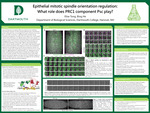
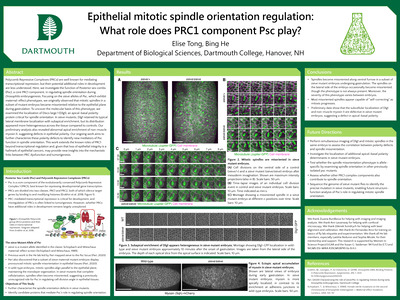
Epithelial Mitotic Spindle Orientation Regulation: What Role Does PRC1 Component Psc Play?
Elise Tong and Bing He
Polycomb Repressive Complexes (PRCs) are well known for mediating transcriptional repression, but their potential additional roles in development are less understood. Here, we investigate the function of Posterior sex combs (Psc), a core PRC1 component, in regulating spindle orientation during Drosophila embryogenesis. Focusing on the sieve alleles of Psc, which exhibit maternal-effect phenotypes, we originally observed that mitotic spindles in a subset of mutant embryos became misoriented relative to the epithelial plane during gastrulation. To uncover the molecular basis of this phenotype, we examined the localization of Discs large 1 (Dlg1), an apical-basal polarity protein critical for spindle orientation. In sieve mutants, Dlg1 retained its typical lateral membrane localization with subapical enrichment, but its distribution appeared more heterogeneous across the tissue compared to controls. Our preliminary analysis also revealed abnormal apical enrichment of non-muscle myosin II, suggesting defects in epithelial polarity. Our ongoing work aims to further characterize these polarity defects to identify new mediators of Psc function in spindle orientation. This work extends the known roles of PRC1 beyond transcriptional regulation and, given that loss of epithelial integrity is a hallmark of epithelial cancers, may provide new insights into the mechanistic links between PRC dysfunction and tumorigenesis.
-

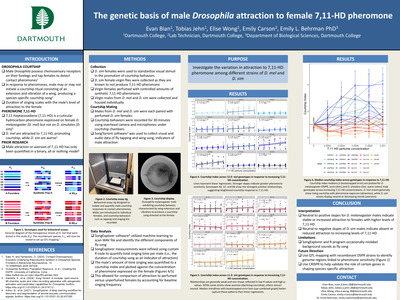
The genetic basis of male Drosophila attraction to female 7,11-HD pheromone
Elise Wong, Tobias Jehn, Evan Bian, Emily Carson, and Emily Behrman
Male Drosophila possess chemosensory receptors to detect contact pheromones which sometimes incite courtship rituals consisting of an extension and vibration of a wing, producing a species-specific courtship song whose length scales with the male’s level of attraction.1 The pheromone 7,11-heptacosadiene (7,11-HD) is a cuticular hydrocarbon pheromone expressed on female D. melanogaster (D. mel) but not on D. simulates (D. sim), causing D. mel attraction and D. sim aversion. This study aimed to quantify male’s attraction to 7,11-HD among different strains of D. mel and D. sim. To do so, virgin D. sim females, known to not produce 7,11-HD, were perfumed with controlled amounts of synthetic 7,11-HD and used to standardize visual stimuli in the promotion of courtship behaviors. Virgin D. mel and D. sim males were collected and each was paired with a single perfumed female. Courtship behaviors were recorded for 30 minutes, and SongTorrant software was used to record visual and audio data of fly tapping and wing song.3 A combination of SongExplorer software and R code utilized machine learning to identify the different components of the fly song and quantify total singing time. The singing time was quantified onto a courtship index and plotted against the concentration of pheromone on the female. The neutral to positive slopes found with D. mel males indicate stable or increased attraction while the neutral to negative slopes of D. sim males indicate absent or reduced attraction to females with higher levels of 7,11-HD.
Printing is not supported at the primary Gallery Thumbnail page. Please first navigate to a specific Image before printing.