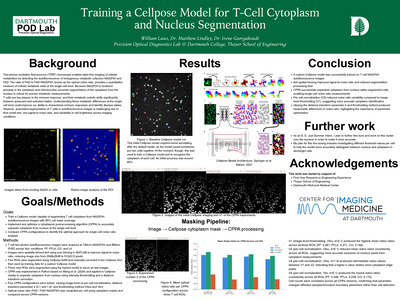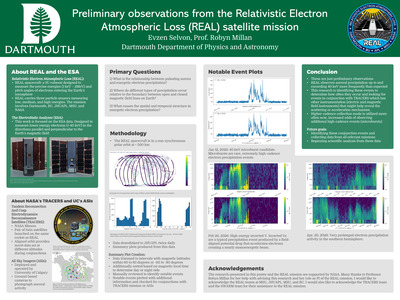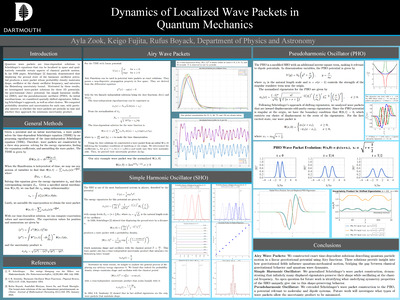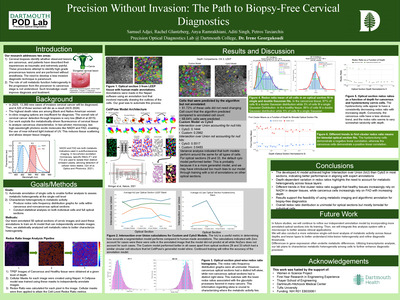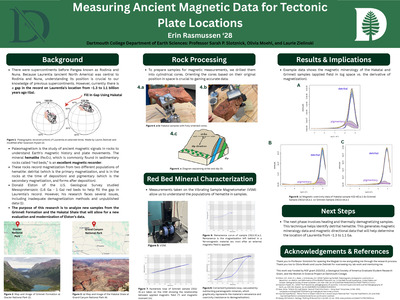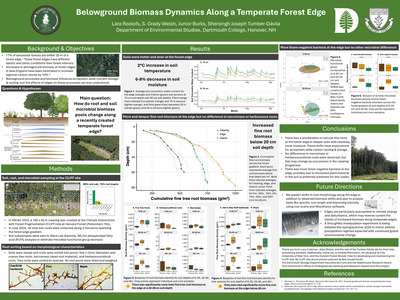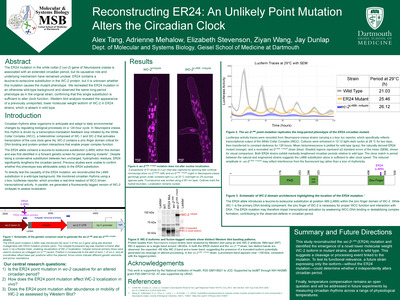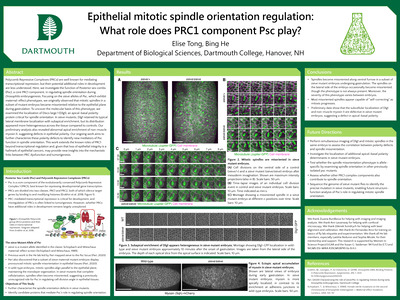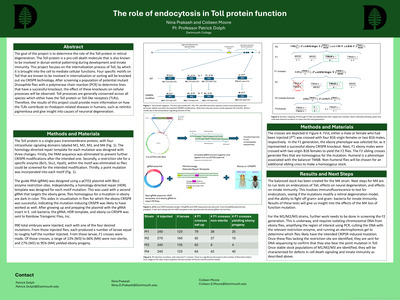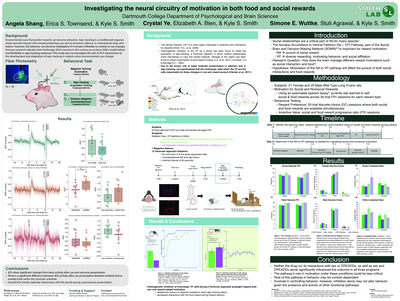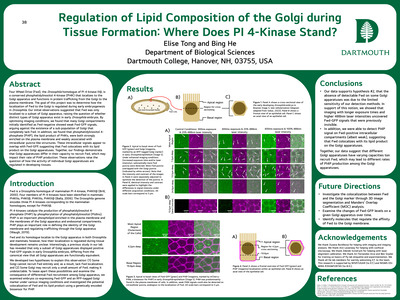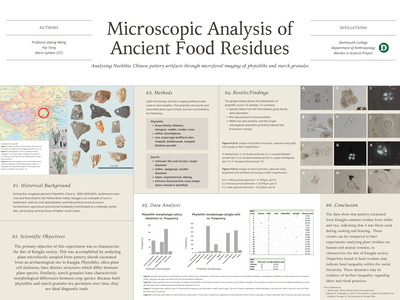

The Wetterhahn Science Symposium celebrates Dartmouth undergraduate science research.
-
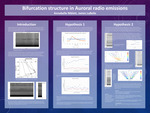
Bifurcation structure in Auroral radio emissions
2023
Annabelle E. Niblett and James W. LaBelle Dr.
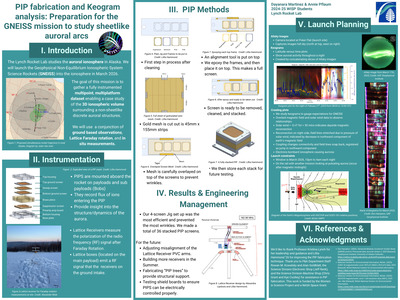
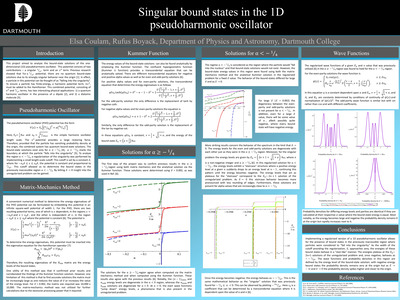
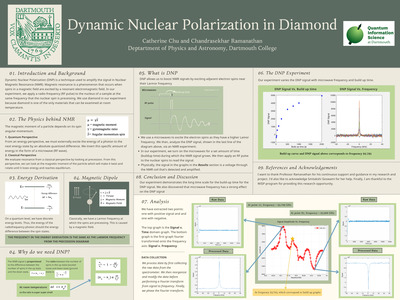
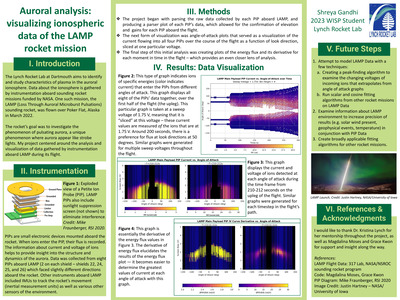
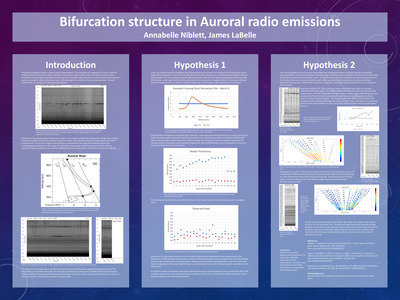
The northern lights, or aurora borealis, are best known for the beautiful optical displays they present in the polar atmosphere. It is less widely known, but the northern lights also emit various types of radio waves which cannot be seen but can be detected with sensitive instruments. These radio waves provide insights into the physics of the aurora. One type of auroral radio emission, called auroral "roar" occurs on frequencies near 3 MHz, somewhat above the highest AM radio frequencies. On some occasions, this radio emission occurs on two closely space frequencies rather than a single frequency band, a phenomenon called a doublet structure. The explanation for these doublet structures is not known. The structure of the electron density in the ionosphere may play a role. The WISP project would entail cataloguing a large number of examples for the first time, in order to determine the distributions of the frequencies and the gap between them. This information may provide a test of whether ionospheric density structure can explain the phenomenon.
-
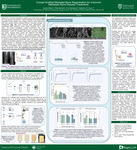
Cryogel Scaffold Mediated Bone Regeneration for Improved Metastatic Bone Disease Treatments
2023
Annika Nikhar, Peter Bertone, Eric Henderson, and Katherine Hixon
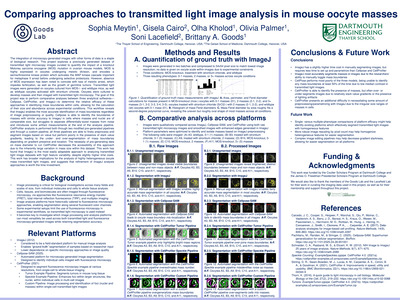
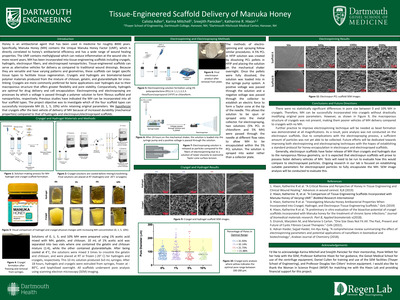
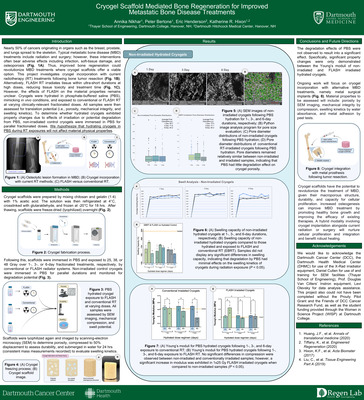
Nearly 50% of cancers originating in organs such as the breast, prostate, and lungs spread to the skeleton. Typical metastatic bone disease (MBD) treatments include radiation and surgery; however, these interventions often bear adverse effects including infection, soft-tissue damage, and osteoporosis. Thus, improved bone regeneration could revolutionize MBD treatments where cryogel scaffolds offer a viable option. This project investigates cryogel incorporation with current radiotherapy (RT) treatments following bone tumor resection. Alternatively, FLASH RT irradiates tissue within ultra-short durations at high doses, reducing tissue toxicity and treatment time. However, the effects of FLASH on the material properties remains unclear. Cryogels were hydrated in phosphate-buffered saline (PBS), mimicking in vivo conditions, and exposed to conventional or FLASH RT at varying clinically-relevant fractionated doses. All samples were then assessed for translation potential (i.e., porosity, mechanical integrity, and swelling kinetics). To determine whether hydrated cryogels exhibited property changes due to effects of irradiation or potential degradation from PBS, non-irradiated control cryogels were immersed in PBS for parallel fractionated doses. We hypothesized that hydrating cryogels in PBS during RT exposures will not affect material physical properties.
-
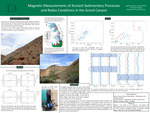
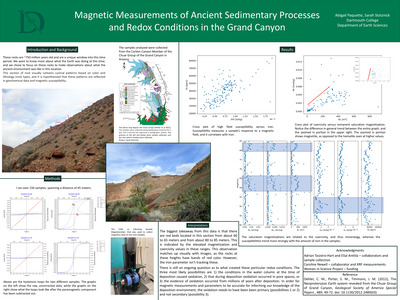
Magnetic Measurements of Ancient Sedimentary Processes and Redox Conditions in the Grand Canyon
2023
Abigail Paquette and Sarah Slotznick
-
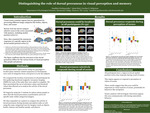
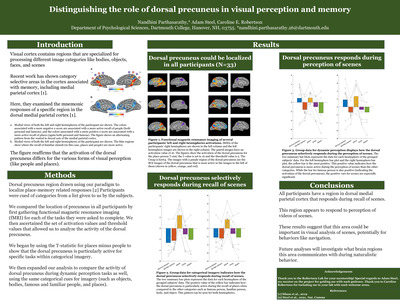
Distinguishing the role of dorsal precuneus in visual perception and memory
2023
Nandhini Parthasarathy, Adam Steel, and Caroline E. Robertson
-
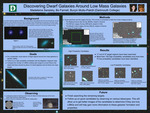
Discovering Dwarf Galaxies Around Low Mass Galaxies
2023
Madeleine Saraisky and Bo Farnell
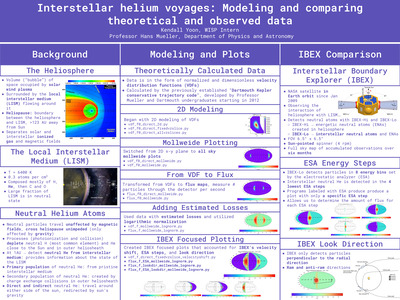
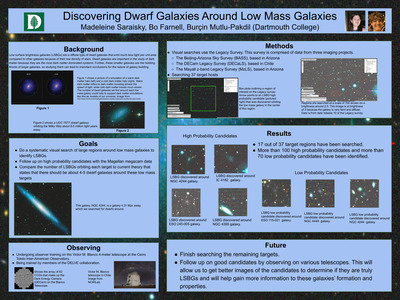
The goal of this project is to discover satellite dwarf galaxies around low mass galaxies. These dwarf galaxies are important to study because a large portion of the galaxies' mass is made up of dark matter. Dwarf galaxies are the smallest, oldest, faintest, and most dark matter dominated systems, and as such, are extremely important for the studies of galaxy formation and dark matter. The satellite dwarves being identified around low mass galaxies are a specific type of dwarf galaxy known as low surface brightness galaxies, or LSBGs. LSBGs are a very diffuse type of dwarf galaxy that emit much less light per unit area compared to other galaxies because of their low density of stars. These galaxies are discovered through a systematic visual search of regions around target hosts (low mass galaxies). This search is conducted using images from the Legacy survey, composed of data from three separate imaging projects. Theories predict that there should be 4-5 LSBGs around each low mass galaxy, so findings from this project could either work to support or refute this theory, contributing either way to the study of LSBGs and dark matter.
-
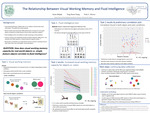
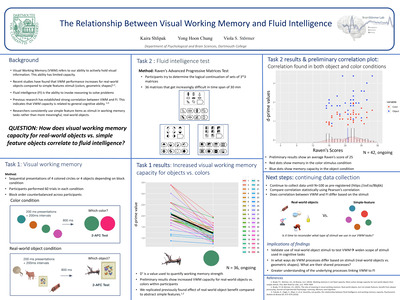
The Relationship Between Visual Working Memory and Fluid Intelligence
2023
Kaira Kuo Shlipak, Yong Hoon Chung, and Viola Stoermer
Carole Folt Research Scholarship Award
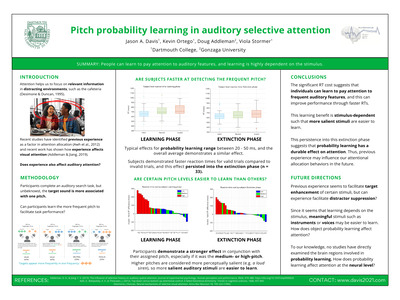
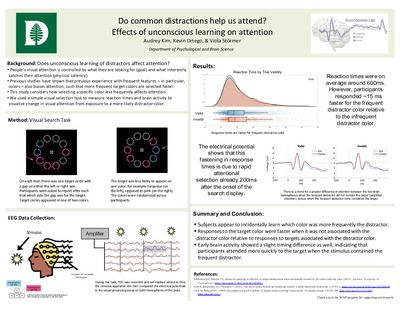
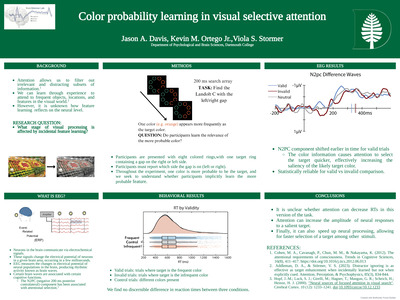
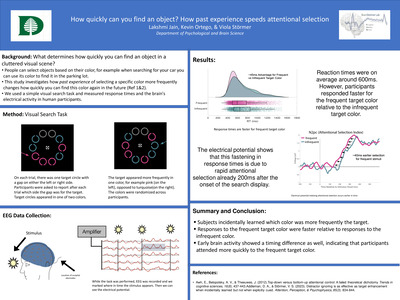
The goal of this project is to investigate the relationship between fluid intelligence and visual working memory capacity. Fluid intelligence refers to the ability to solve abstract problems and is one of the most important constructs in psychological research. Interestingly, visual working memory– the limited ability to hold visual information in an active state for short periods of time– has been shown to strongly correlate with measures of fluid intelligence. However, the mechanisms underlying this relation are still unclear. My research investigates how broad the relationship between working memory capacity and intelligence measures are, and whether it generalizes to more naturalistic tasks. Specifically, recent research has shown that working memory capacity is increased when remembering real-world objects relative to simple visual features (i.e., colored squares or oriented lines) that have been traditionally used. I propose to test whether the capacity to remember these real-world objects also correlates with measures of fluid intelligence. The findings from this study have important implications for how fluid intelligence measures relate to different working memory tasks, and in particular to how we use working memory in more naturalistic settings: when we are trying to remember real-world objects, and not just simple geometric shapes. -
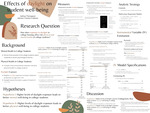
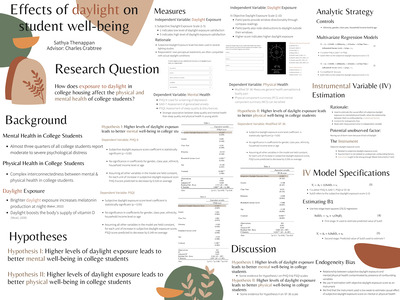
Effects Of Daylight On Student Well-being
2023
Sathya Thenappan
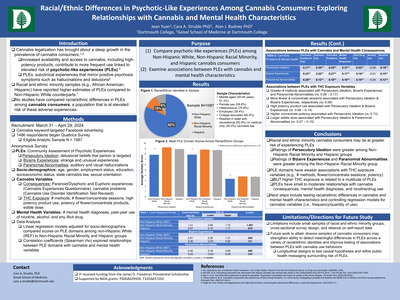
While existing literature predominantly deals with the impact of daylight on adults in general and more specifically at the workplace, less is known about its impact on the college student demographic and daylight exposure levels at college residences. Given its considerable impact on both the physical and mental well-being of individuals, daylight has been used in the treatment of an assortment of diseases from seasonal affective disorder to depression. With college students constituting the majority of today’s people who suffer from mental health issues in society, uncovering the link between daylight exposure and its impact on the physical and mental wellbeing of these students specifically, will enable harnessing of the benefits of daylight, and potentially alleviate the ongoing mental health crisis in college populations. In this study, I use a series of regression analyses and instrumental variable estimations to ascertain the link between exposure to daylight and its impact on both the physical (SF-36 scale), and mental (PHQ-9, GAD-7, and PSQI scales) well-being of a cohort of Dartmouth undergraduates (N=344), who vary in terms of their daylight exposure levels. In particular, I differentiate between two scales of daylight exposure levels, namely a subjective daylight exposure scale which reflects college students’ self-assessment of their level of daylight exposure, and an objective daylight exposure scale that reflects a more objective assessment of their level of daylight exposure within their college housing. Results provide some support for the hypotheses that higher levels of daylight exposure lead to both better mental and physical health outcomes. However, further instrumental variable estimation using the objective daylight exposure scale as an instrument proves that this estimated causal effects are statistically insignificant or imprecise, despite controlling for confounding factors. Ultimately, there is not enough evidence to support a causal relationship between the daylight exposure treatment and the health outcomes. This does not necessarily mean that there is no causal effect between daylight exposure and the physical and mental well-being of college students, but rather, that the available data and methods used in this study do not provide convincing enough evidence to prove causation.
-
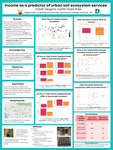
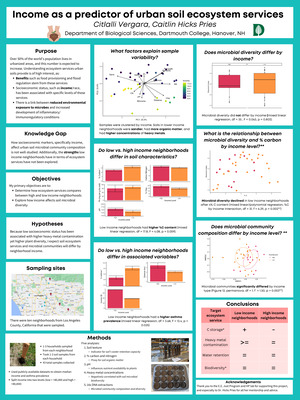
Income as a predictor of urban soil ecosystem services
2023
Citlalli Vergara and Caitlin Hicks Pries
-
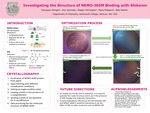
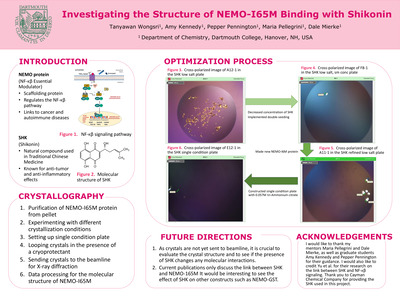
Investigating the Structure of NEMO-I65M Binding with Shikonin
2023
Tanyawan Wongsri, Amy Kennedy, Pepper Pennington, Maria Pellegrini, and Dale Mierke
This poster summarizes the results of a protein crystallography investigation between the NEMO-I65M mutant and small molecule Shikonin (SHK).
-
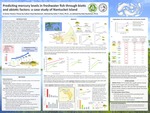
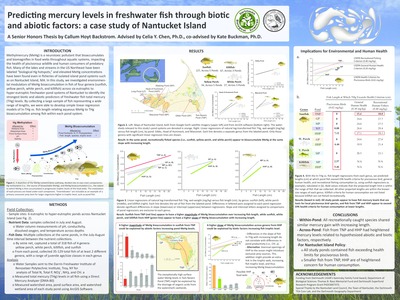
Predicting mercury levels in freshwater fish through biotic and abiotic factors: a case study of Nantucket Island
2018
Callum Hoyt Backstrom, Celia Y. Chen, and Kate Buckman
-
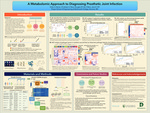
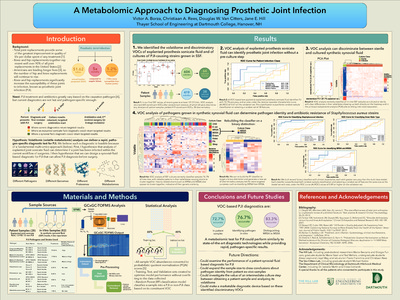
A Metabolomic Approach to Diagnosing Prosthetic Joint Infection
2018
Victor Borza, Christian A. Rees, Douglas W. Van Citters, and Jane E. Hill
-
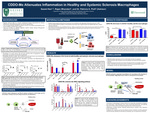
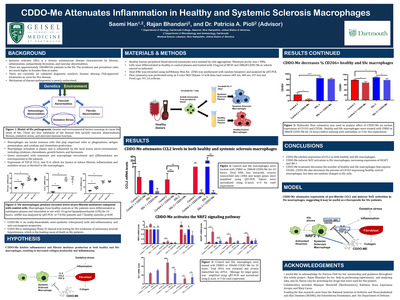
CDDO-Me Attenuates Inflammation in Healthy and Systemic Sclerosis Macrophages
2018
Saemi Han, Rajan Bhandari, and Patricia A. Pioli
-
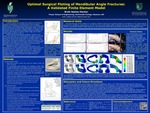
Optimal Surgical Plating of Mandibular Angle Fractures: A Validated Finite Element Model
2018
Brett Seeley-Hacker
-
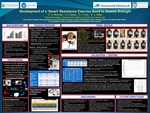
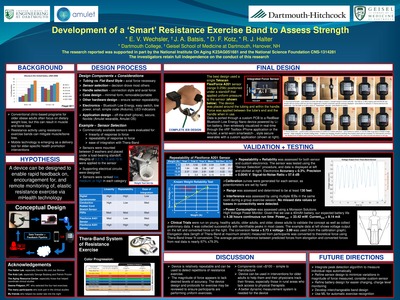
Development of a ‘Smart’ Resistance Exercise Band to Assess Strength
2018
Emily V. Wechsler, John A. Batsis, David F. Kotz, and Ryan J. Halter