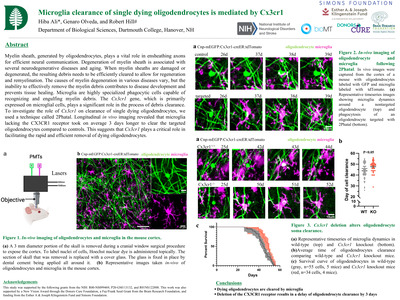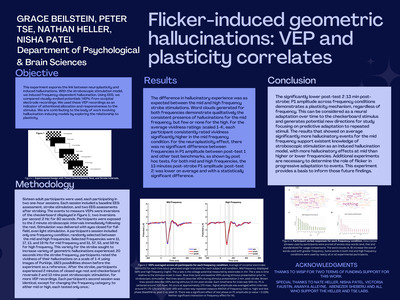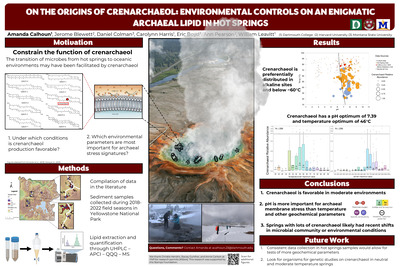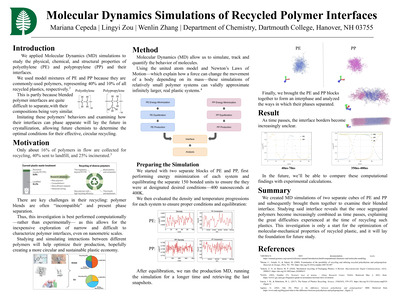

The Wetterhahn Science Symposium celebrates Dartmouth undergraduate science research.
-
Benchmarking Low-Power Line-Frequency Transformers
2025
Alec S. Goldstein, Allen T. Nguyen, and Charles R. Sullivan
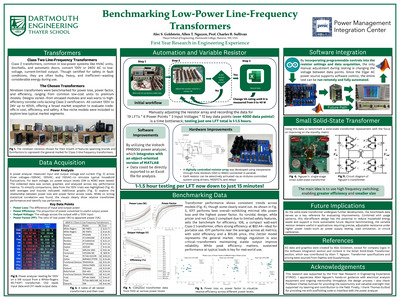
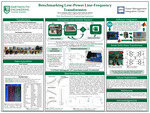
This poster presents research from the First-Year Research in Engineering Experience (FYREE) at Dartmouth's Thayer School of Engineering, focused on benchmarking low-power line-frequency transformers (LFTs). The study examined 19 commercial transformers used in HVAC units, doorbells, and similar systems, assessing performance in terms of power loss, efficiency, and power factor under varying input conditions.
To streamline testing, the team developed a semi-automated system integrating a programmable resistor array, Arduino-controlled switching, and MATLAB-compatible data acquisition using a Voltech PM6000 analyzer. These hardware and software improvements reduced transformer testing time from over an hour to just 15 minutes per unit. The resulting data—over 4000 points—revealed trends across transformer models and identified trade-offs between price, size, and efficiency.
The benchmarking process was also applied to test a small solid-state transformer designed by co-author Allen T. Nguyen, which aims to improve standby power efficiency through high-frequency switching.
This work lays the foundation for future research into more efficient, compact transformer technologies and supports broader energy-saving applications in residential and industrial electronics.
-

Studies of Electrical Contacts with MnZn Ferrite Ceramics
2025
Thomas Guillod, Evzen Selvon, and Charles R. Sullivan
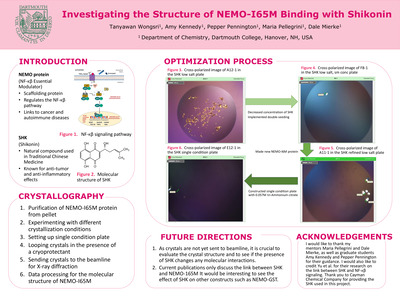
A poster summary of our findings regarding 3 methods to electrically contact MnZn ferrite ceramics with brass electrodes. In particular, a bare control, silver paint, indium foil, and a combined gold sputtering and indium foil contact. This study focused on the reproducibility, linearity, and stability of these contact methods, examined through DC and AC testing.
-

LLM Hallucination Station
2025
Bruno Miranda Henrique, Gregory M. Hyde, Axel Obrien, Corwin Nicholson, Tina Pan, Anthony P. Ragazzi, Colin H. Wolfe, and Eugene Santos
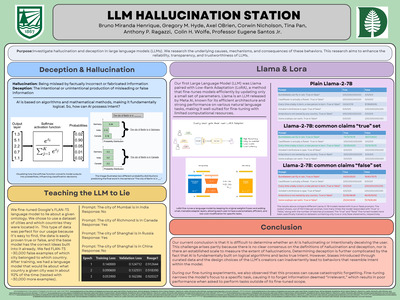
This study aims to investigate hallucination and deception in large language models (LLMs). We research the underlying causes, mechanisms, and consequences of these behaviors. As LLMs become increasingly integrated into our everyday lives it is critical for us to understand these models. That’s why this research aims to enhance the reliability, transparency, and trustworthiness of LLMs. Two methods were implemented to help examine LLMs and when hallucinating and deceiving. Our Llama & Lora models were trained on false information and then told to evaluate true or false statements to see the existing context window of the LLMs. Another method was to train a LLM to lie using the Google Flan model, simply by training it on false information and having it determine which city belonged to which country. Our research leads us to highlight the challenge of defining hallucinations and deception of AI, as there is no standard definition or measurement.
-
Cross-Race Mentorship Conversations: Studying How White Mentors Share Advice
2025
Amirahimaan A. Kalonji, Shannon Li, and Kiara Sanchez
-

Exploring Path Complex Networks: Implications for Drug Development
2025
Brian Lihari, Peter Chin, and Sie Hendrata
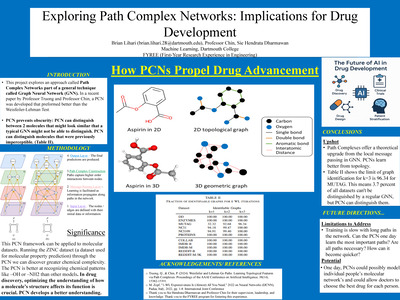
This project explores an approach called Path Complex Networks part of a general technique called Graph Neural Network (GNN). In a recent paper by Professor Truong and Professor Chin, a PCN was developed that performed better than the Weisfeiler-Lehman Test. PCN prevents obscurity: PCN can distinguish between 2 molecules that might look similar that a typical GNN might not be able to distinguish. PCN can distinguish molecules that were previously imperceptible.
-
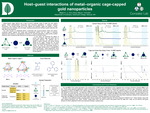
Host–Guest Interactions of Metal–Organic Cage-Capped Gold Nanoparticles
2025
Megan K. Lu, Zhou Deng, and Miguel I. Gonzalez
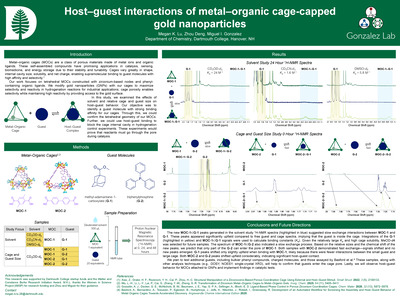
Metal–organic cages (MOCs) are a class of porous materials made of metal ions and organic ligands. These self-assembled compounds have promising applications in catalysis, sensing, biomedicine, and energy storage due to their stability and tunability. Cages vary greatly in shape, internal cavity size, solubility, and net charge, enabling supramolecular binding to guest molecules with high affinity and selectivity.
Our work focuses on tetrahedral MOCs constructed with zirconium-based nodes and phenyl-containing organic ligands. We modify gold nanoparticles (GNPs) with our cages to maximize selectivity and reactivity in hydrogenation reactions for industrial applications; cage porosity enables selectivity while maintaining high reactivity by providing access to the gold surface.
In this study, we examined the effects of solvent and relative cage and guest size on host–guest behavior. Our objective was to identify a guest molecule with strong binding affinity for our cages. Through this, we could confirm the tetrahedral geometry of our MOCs. Further, we could use host–guest binding to block the cage internal cavity in hydrogenation control experiments. These experiments would prove that reactants must go through the pore during catalysis.
-
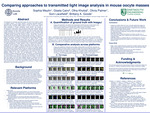
Comparing approaches to transmitted light image analysis in mouse oocyte masses
2025
Sophia Meytin, Gisela Cairo, Olha Kholod, Olivia Palmer, Soni Lacefield, and Brittany A. Goods
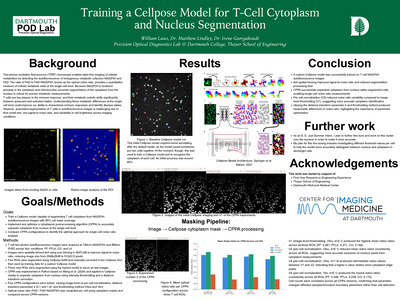
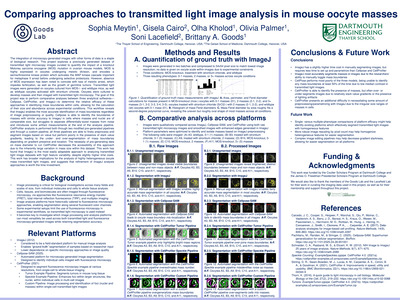
This project explores a dataset of transmitted light microscopy images quantifying the impact of a knockout Moloney sarcoma oncogene (MOS) mutation in ovarian mouse models. MOS is highly expressed in oocytes undergoing meiotic division, and encodes a serine/threonine kinase protein which activates the MAP kinase cascade. Absence of MOS expression has been noted to coincide with loss of meiotic arrest, which impedes fertilization, as well as germline tumor growth. Oocytes were cultured from MOS-/- and wildtype mice, as well as wildtype oocytes activated with strontium chloride. Oocytes were cultured to develop masses and then imaged with transmitted light microscopy. Comparative analyses were performed between three analytical softwares—Cellpose, CellProfiler, and ImageJ—to determine the relative efficacy of these approaches in identifying mass boundaries, size, and abundance. ImageJ enables the most accurate identification of mass boundaries regardless of image preprocessing or quality. Cellpose is able to identify the boundaries of masses with similar accuracy to ImageJ in cells where masses and nuclei are of comparable size, but struggles to identify differentially-sized masses and introduces artifact measurements. CellProfiler analysis is performed through two modified pre-generated pipelines and through a custom pipeline; all three pipelines are able to preprocess and segment images based on value but perform poorly in the presence of stark value gradients, leading to under- or over-segmentation of mass boundaries. The necessity of pre-generating data on mass diameter to run CellProfiler decreases the accessibility of this approach due to the inherently large variation in mass size within this dataset.
-
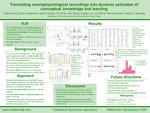
Translating Neurophysiological Recordings into Dynamic Estimates of Conceptual Knowledge and Learning
2025
Kaitlyn Peng, Daniel Carstensen, Sarah Parigela, Om Shah, Alex Wingo, Angelyn Liu, Joy Maina, Keene Yael Dampal, and Jeremy Manning
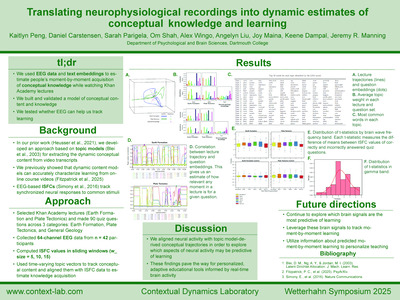
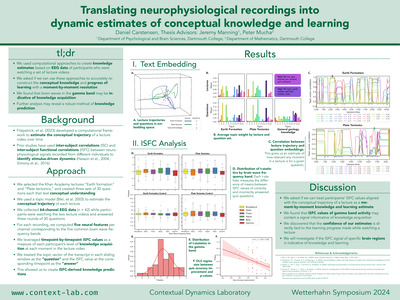
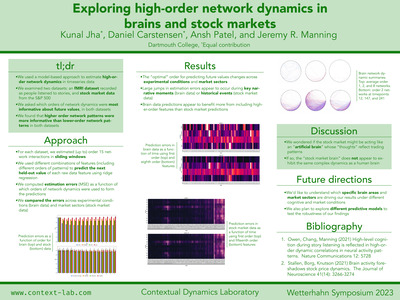
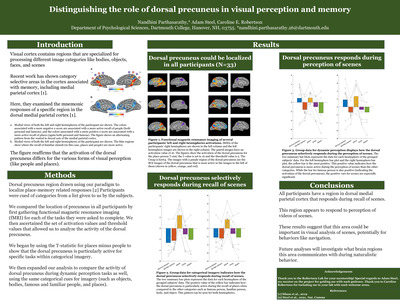
In our research, we wanted to explore whether we could track how people learn concepts in real-time by combining brain recordings with computational models of conceptual content. Our core question was: can we measure moment-by-moment learning as it happens in someone's brain?
To investigate this, we had 42 participants watch Khan Academy lectures on Earth Formation and Plate Tectonics while we recorded their brain activity using 64-channel EEG. We then created 90 quiz questions across three categories--Earth Formation, Plate Tectonics, and General Geology--to test what they actually learned from the videos. We used topic modeling, a computational technique, to extract and track the conceptual content from the video transcripts, allowing us to see how different concepts evolved throughout the lectures. We also calculated Inter-Subject Functional Correlation (ISFC), which essentially measures how synchronized participants' brain responses were during different parts of the videos. By aligning these brain synchronization patterns with our conceptual trajectories, we could explore whether brain activity patterns could predict learning outcomes.
Our findings were promising. We discovered that brain activity patterns, particularly in the gamma frequency band, differed significantly between questions that participants answered correctly versus incorrectly. This approach successfully linked specific moments in the lectures to learning outcomes, demonstrating that EEG signals can indeed help us track knowledge acquisition as it unfolds. Moving forward, we aim to leverage these brain-based learning signals to develop personalized, adaptive educational tools that could adjust teaching in real-time based on a student's ongoing brain activity.
-
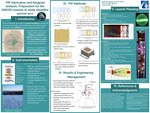
PIP fabrication and Keogram analysis: Preparation for the GNEISS mission to study sheetlike auroral arcs
2025
Annie Pflaum and Dayanara Martinez
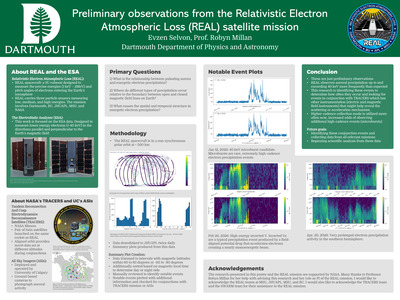
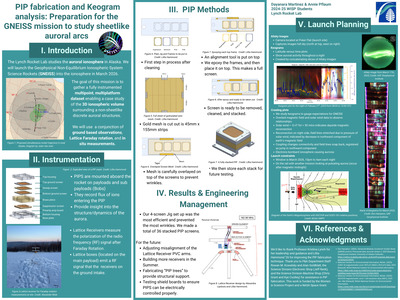
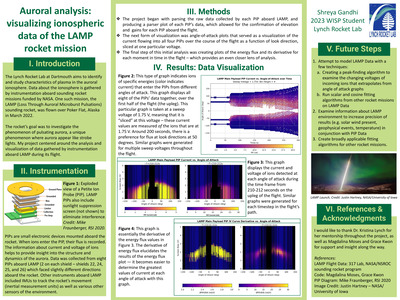
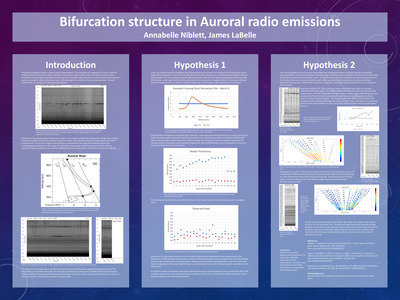
The upcoming Geophysical Non-Equilibrium Ionospheric System Science Rocket (GNEISS) mission aims to investigate the structure and dynamics of the auroral ionosphere by deploying a fully instrumented multipoint, multiplatform payload suite into the Alaskan ionosphere in March 2026. This project supports GNEISS through the fabrication of Petite Ion Probes (PIPs) and analysis of auroral keograms derived from all-sky imagery. PIPs are used to measure ion flux and are mounted on both main and subpayloads to provide spatial insight into electron precipitation patterns. We detail the step-by-step assembly process for PIP stacks using gold-coated mesh and screens and report improvements in fabrication methods that reduced mechanical wrinkling. Additionally, keogram analysis was performed on March 2025 auroral data to develop magnetic field-aligned expectations for GNEISS, correlating observed structures with reconnection signatures. These efforts inform both instrument readiness and scientific planning.
-
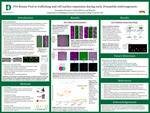
PI4-Kinase Fwd in trafficking and cell surface expansion during early Drosophila embryogenesis
2025
Samantha A. Pressman, Sophia M. Micale, and Bing He
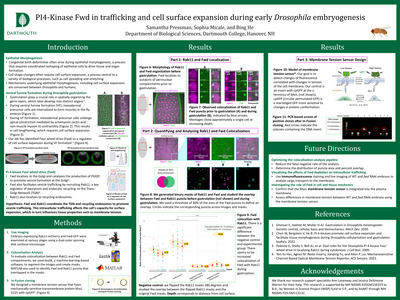
Congenital birth deformities often arise during epithelial morphogenesis, displaying the need to understand the mechanisms underlying this process. Cell shape changes that mediate morphogenesis often require cell surface expansion to accommodate shifts in 3D tissue geometry. Previous work has identified Four Wheel Drive (Fwd), a Golgi-localized phosphatidylinositol 4-kinase (PI4K) IIIβ ortholog, as a regulator for cell surface expansion during Drosophila ventral furrow formation, a well-characterized model for epithelial folding.
Intracellular trafficking affects the cell’s capacity for surface expansion, which influences tissue properties such as membrane tension. This research will investigate the potential colocalization between Fwd and Rab11, a marker for recycling endosomes. We hypothesize that Fwd and Rab11 coordinate the trans-Golgi network and recycling endosomes to promote vesicle trafficking. We will evaluate the colocalization of Fwd and Rab11 through live imaging of embryos expressing Fwd-GFP and Rab11-mCherry, image segmentation and mask creation using ilastik, and identification of Fwd and Rab11 puncta that overlap in the masks.
In parallel, the project will investigate the potential function of Fwd in regulating membrane tension through the design of a membrane tension sensor. The sensor is a fusion protein consisting of a mechanosensitive channel linked to GFP, where the fluorescence intensity of GFP is inversely correlated with membrane tension. The effects of Fwd depletion on membrane tension dynamics will be visualized by live imaging of wild-type and fwd RNAi embryos. These experiments will provide key information about the molecular role of Fwd in cell surface expansion and its effects on the tissue’s mechanical properties.
-
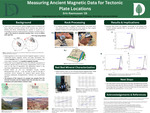
Measuring Ancient Magnetic Data for Tectonic Plate Locations
2025
Erin Rasmussen, Sarah Slotznick, and Laurie Zielinski
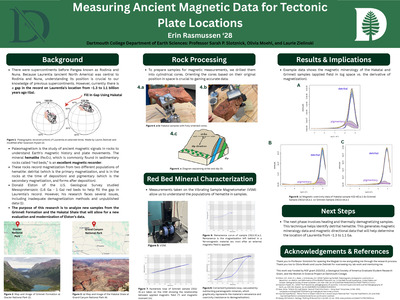
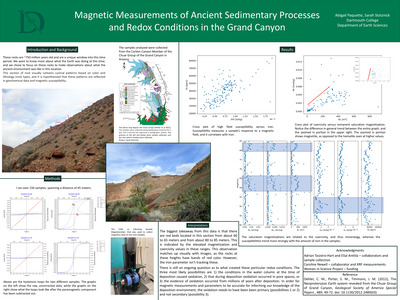
There were supercontinents before Pangea known as Rodinia and Nuna. Because Laurentia (ancient North America) was central to Rodinia and Nuna, understanding its position is crucial to our knowledge of previous supercontinents. However, currently there is a gap in the record on Laurentia’s location from ~1.3 to 1.1 billion years ago (Ga). Donald Elston of the U.S. Geological Survey studied Mesoproterozoic (1.6 Ga - 1 Ga) red beds to help fill the gap in Laurentia’s record. However, his research faces several issues, including inadequate demagnetization methods and unpublished data (1). The purpose of this research is to analyze new samples from the Grinnell Formation and the Hakatai Shale that will allow for a new evaluation and modernization of Elston’s data.
-
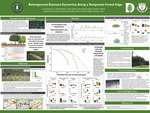
Belowground Biomass Dynamics Along a Temperate Forest Edge
2025
Lara Holbrook Roelofs, S. Grady Welsh, Junior Burks, and Shersingh Joseph Tumber-Dávila
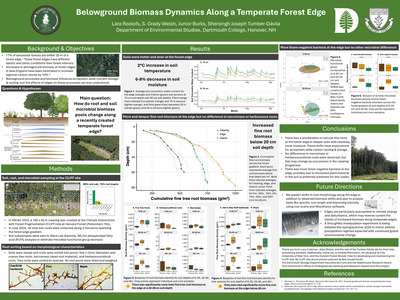
Temperate forests are one of the most fragmented ecosystems globally. Anthropogenic forest edges expose fragmented forests to a range of unique abiotic and biotic conditions. While aboveground tree response to these conditions are relatively well studied, the impact of edge conditions on belowground processes and systems remains less understood. This project examines how forest edge creation affects the rooting distribution and biomass of dominant temperate tree species, as well as soil microbial functional group biomass.
-

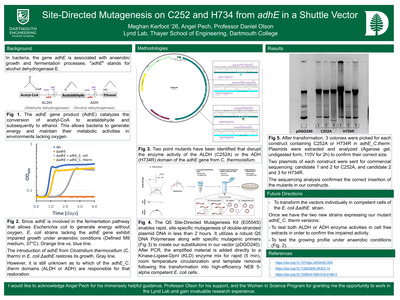
Reconstructing ER24: An Unlikely Point Mutation Alters the Circadian Clock
2025
Alex Tang, Adrienne Mehalow, Elizabeth-Lauren Stevenson, Ziyan Wang, and Jay Dunlap
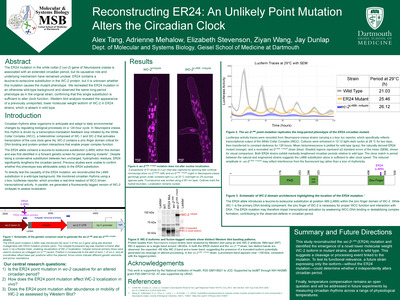
The ER24 mutation in the white collar-2 (wc-2) gene of Neurospora crassa is associated with an extended circadian period, but its causative role and underlying mechanism have remained unclear. ER24 contains a leucine-to-isoleucine substitution in the WC-2 protein, but it is unknown whether this mutation causes the mutant phenotype. We recreated the ER24 mutation in an otherwise wild-type background and observed the same long-period phenotype as in the original strain, confirming that this single substitution is sufficient to alter clock function. Western blot analysis revealed the appearance of a previously unreported, lower molecular weight isoform of WC-2 in ER24 strains, which is absent in wild type.
-
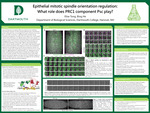
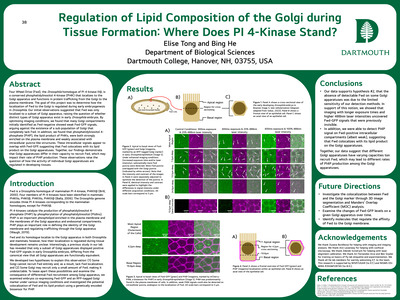
Epithelial Mitotic Spindle Orientation Regulation: What Role Does PRC1 Component Psc Play?
2025
Elise Tong and Bing He
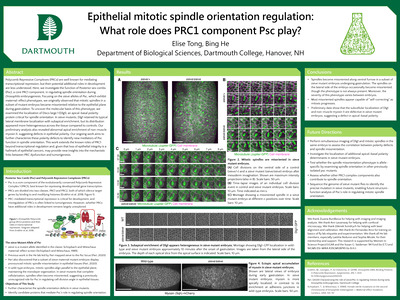
Polycomb Repressive Complexes (PRCs) are well known for mediating transcriptional repression, but their potential additional roles in development are less understood. Here, we investigate the function of Posterior sex combs (Psc), a core PRC1 component, in regulating spindle orientation during Drosophila embryogenesis. Focusing on the sieve alleles of Psc, which exhibit maternal-effect phenotypes, we originally observed that mitotic spindles in a subset of mutant embryos became misoriented relative to the epithelial plane during gastrulation. To uncover the molecular basis of this phenotype, we examined the localization of Discs large 1 (Dlg1), an apical-basal polarity protein critical for spindle orientation. In sieve mutants, Dlg1 retained its typical lateral membrane localization with subapical enrichment, but its distribution appeared more heterogeneous across the tissue compared to controls. Our preliminary analysis also revealed abnormal apical enrichment of non-muscle myosin II, suggesting defects in epithelial polarity. Our ongoing work aims to further characterize these polarity defects to identify new mediators of Psc function in spindle orientation. This work extends the known roles of PRC1 beyond transcriptional regulation and, given that loss of epithelial integrity is a hallmark of epithelial cancers, may provide new insights into the mechanistic links between PRC dysfunction and tumorigenesis.
-

The genetic basis of male Drosophila attraction to female 7,11-HD pheromone
2025
Elise Wong, Tobias Jehn, Evan Bian, Emily Carson, and Emily Behrman
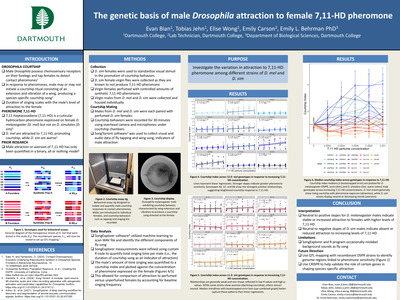
Male Drosophila possess chemosensory receptors to detect contact pheromones which sometimes incite courtship rituals consisting of an extension and vibration of a wing, producing a species-specific courtship song whose length scales with the male’s level of attraction.1 The pheromone 7,11-heptacosadiene (7,11-HD) is a cuticular hydrocarbon pheromone expressed on female D. melanogaster (D. mel) but not on D. simulates (D. sim), causing D. mel attraction and D. sim aversion. This study aimed to quantify male’s attraction to 7,11-HD among different strains of D. mel and D. sim. To do so, virgin D. sim females, known to not produce 7,11-HD, were perfumed with controlled amounts of synthetic 7,11-HD and used to standardize visual stimuli in the promotion of courtship behaviors. Virgin D. mel and D. sim males were collected and each was paired with a single perfumed female. Courtship behaviors were recorded for 30 minutes, and SongTorrant software was used to record visual and audio data of fly tapping and wing song.3 A combination of SongExplorer software and R code utilized machine learning to identify the different components of the fly song and quantify total singing time. The singing time was quantified onto a courtship index and plotted against the concentration of pheromone on the female. The neutral to positive slopes found with D. mel males indicate stable or increased attraction while the neutral to negative slopes of D. sim males indicate absent or reduced attraction to females with higher levels of 7,11-HD.
-

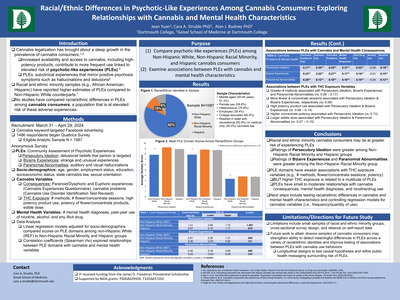
Patient-healthcare provider interactions on Cannabis for Therapeutic Purposes
2024
Jivan Achar, Cara Struble, and Alan Budney
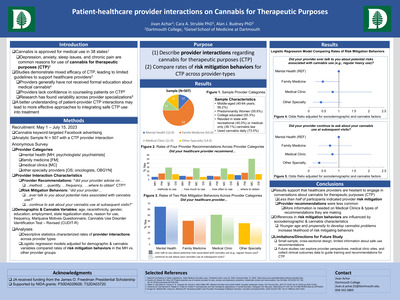
Background and Objectives: There is limited evidence guiding the efficacy and safety of cannabis for therapeutic purposes (CTP). Healthcare providers lack requisite knowledge to support patients. This study aimed to describe and compare aspects of an initial CTP interaction across different provider-types. We anticipated mental health providers would differ from other provider-types based on varied exposure to cannabis consumers.
Methods: Adult cannabis consumers (N=507) from the U.S. completed an anonymous online survey rating aspects of an initial CTP interaction, including risk mitigation behaviors and recommendations about use. Analyses examined CTP interactions among four provider groups (Mental health [MH], Family Medicine [FM], Medical Clinics [MC], and Other Specialty [OS]).
Results: Less than half of the sample reported discussion of cannabis risks (44.0%) or subsequent follow-ups (44.0-46.7%). Recommendations (where to obtain, consumption method, dose, and frequency) were uncommon (9.7%-19.5%). While the MH group reported the highest rates of risk mitigation discussion (62.0%-65.0%), models adjusted for sociodemographic and cannabis characteristics were largely non-significant. MC providers were more likely than the MH group to report recommendations (p’s<.05). Younger age and greater cannabis-related problems increased likelihood of risk mitigation and provider recommendations.
Discussion and Conclusions: Data suggest that CTP interactions focused on risk but generally lacked comprehensive recommendations for safe use. Data from provider perspectives could support the need for CTP dosing guidelines and training for healthcare providers to promote safe CTP practices.
Scientific Significance: For the first time, this study explored several aspects of CTP interactions and compared experiences across a variety of provider-types.
-
Healthcare utilization associated with mental health symptoms in young adults with type 1 diabetes
2024
Ayushya Ajmani, Ujvala Jupalli, Enzo Plaitano, and Catherine Stanger
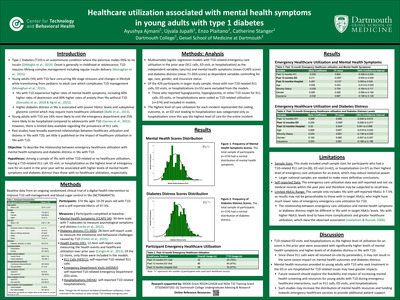
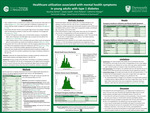
Today, as mental health illnesses such as depression, anxiety, and eating disorders continue to expand, they are further associated with poor glycemic control, decreased quality of life, increased unemployment, and worse self-care. This study aims to describe the relationship between psychological and diabetes distress and emergency healthcare utilization including 911 calls, ED visits, and hospitalizations among young adults with T1D. The collected and analyzed data indicate that T1D-related ED visits and hospitalizations are significantly associated with higher levels of mental health symptoms and diabetes distress in young adults. In contrast, no significant relationships were found between T1D-related 911 calls and mental health symptoms or diabetes distress.
-

Gastroenterology Environmental Impact Assessment: LCA in Endoscopy
2024
Fatma Al Arbawi, Joao De Araujo Jr., Cate Pittman, Anya Ramrakhiani, Fatmata Sesay, and Adam Sobel
With this project we aimed to understand the current state of endoscopy carbon impact and ideate several possible solution sets to help our sponsor, gastroenterologist Dr. Heiko Pohl, know where to focus future engineering design and research. In the first term of research, we reviewed LCA frameworks and observed endoscopy procedures to understand where there were opportunities to improve on the carbon footprint of the procedure. Once identified, these improvement areas were the focus of our second term of work:
1. Hypothetical packaging, shipping, and material changes
2. Designing a reusable handle for polyp removal procedures
3. Designing a mechanism to keep bioloads out of the endoscope during procedures like a bile duct exploration
-
Translating Neurophysiological Recordings Into Dynamic Estimates of Conceptual Knowledge And Learning
2024
Daniel L. Carstensen, Jeremy R. Manning, and Peter Mucha
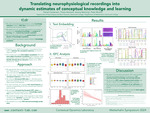
This study investigates the potential of a computational approach to provide moment-by-moment insights into a student’s comprehension of lecture material through analysis of their neurophysiological responses during the lecture. In doing so, we present a solution to two difficult problems. How do we quantify the conceptual content of a lecture video? And how can we use EEG recordings to compute a knowledge estimate of this conceptual content? First, we used topic modeling to generate moment-by-moment estimates of the conceptual content of a lecture. Then we used EEG recordings collected during the lecture to compute an ISFC-derived knowledge estimate of this conceptual content. We found that particularly gamma band activity may contain a signal indicative of knowledge acquisition.
-
Computational modeling of human sequential decision making in high-dimensional environments
2024
Seoyoon Choi, Chong Wang, and Alireza Soltani
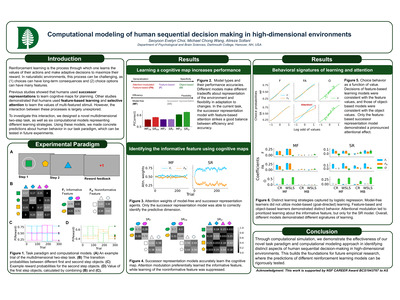
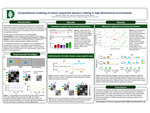
Reinforcement learning is the process through which one learns the values of their actions and make adaptive decisions to maximize their reward. In naturalistic environments, this process can be challenging, as (1) choices can have long-term consequences and (2) choice options can have many features.
Previous studies showed that humans used successor representations to learn cognitive maps for planning. Other studies demonstrated that humans used feature-based learning and selective attention to learn the values of multi-featured stimuli. However, the interaction between these processes is largely unexplored.
To investigate this interaction, we designed a novel multidimensional two-step task, as well as six computational models representing different learning strategies. Using these models, we made concrete predictions about human behavior in our task paradigm, which can be tested in future experiments.
-
Singular bound states in the 1D pseudoharmonic oscillator
2024
Elsa Coulam and Rufus Boyack
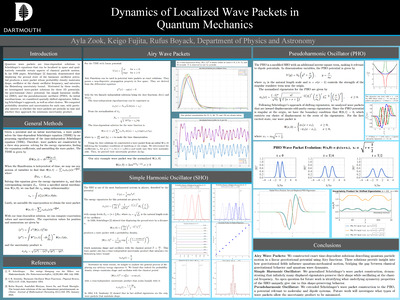
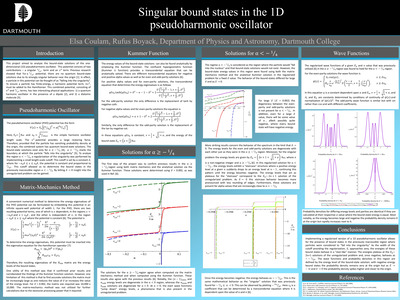
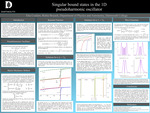
This project aims to analyze the bound-state solutions of the one-dimensional pseudoharmonic oscillator potential. Past literature has suggested that bound-state solutions exist only when the coupling constant is greater than or equal to negative one quarter. However, previous research using matrix mechanics and a transcendental Kummer function has discovered bound-state solutions in the region less than negative one quarter. The wave functions of these solutions will be extensively studied by analyzing the limiting form of their probability distribution to understand the origins of these singular energies. Additionally, the expectation values of these wave functions will be analyzed, considering that the singular bound-state wave functions are not peaked at the origin. This analysis will also extend to a modified version of the hydrogen atom to investigate if it exhibits similar behavior. These analyses will offer insights into the essential mathematical properties of singular potentials in one dimension and explore the existence of a universal probability distribution for such states in singular one-dimensional potentials.
-
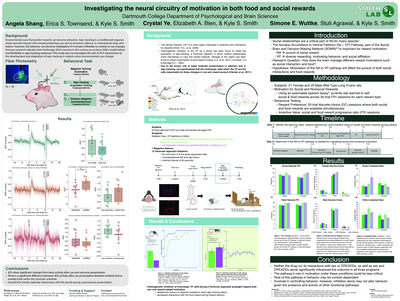
Characterizing Dopaminergic Signaling in the Nucleus Accumbens Core Across Different Sign-tracking responses using Fiber Photometry
2024
Daniela Garrod, Erica Townsend, and Kyle S. Smith
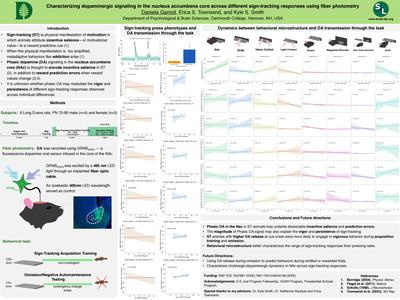
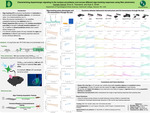
Motivation is a fundamental force driving our everyday actions, yet the intricate neural pathways underlying it and the ways it manifests differently among individuals remain largely unknown. To assess this question, this study characterizes the role of dopamine (DA) signaling in the nucleus accumbens core (NAc) on individual differences in sign-tacking responses. Peak DA signaling during reward-predicted cue (CS+) onset was recorded through in-vivo fiber photometry on the last day of sign-tracking training, while the sign-tracking responses were measured through presses per minute (PPMs) and behavioral video scoring. Rats were then placed in an omission schedule where the persistence and vigor of sign-tracking responses were tested. Results indicate that DA release in the NAc at CS+ onset during sign-tracking training may not only attribute incentive value to a reward-predicting cue but also regulate how much we want to interact with it or want it. There are distinct correlations between DA signaling and sign-tracking behaviors during both sign tracking training and omission trials, suggesting that DA release at CS+ onset may serve a different function in these two paradigms. Overall, these findings attempt to understand the rich differences in motivated behavior, which could potentially be useful in the diagnosis and treatment of disorders like addiction and binge eating.
-
Do common distractions help us attend? Effects of unconscious learning on attention
2024
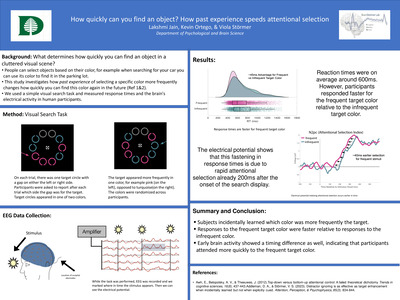
Audrey Y. Kim, Kevin Ortego, and Viola Störmer
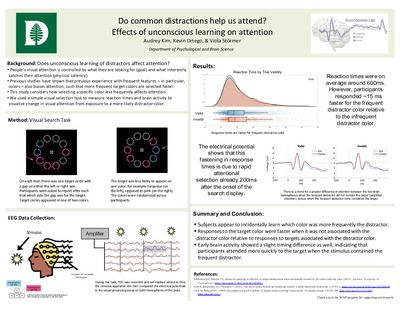
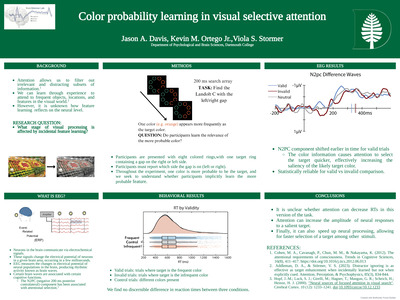
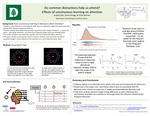
This project seeks to investigate the mechanisms underlying our ability to select relevant and ignore irrelevant information. At any moment, we are confronted with an overwhelming amount of sensory information – far more than we can process at once. Selective attention is the cognitive function that allows us to prioritize processing relevant inputs and ignoring irrelevant or distracting inputs, making selective attention a core cognitive capacity that underlies and constraints information processing in the human brain. Traditionally, attention theory distinguishes between two types of selection: consciously deciding what to focus on (top-down, or endogenous attention), and attentional focus drawn to salient stimuli in the environment (bottom-up, or exogenous attention). More recently, another type of attention has been suggested in the literature, namely learned attention, where the attentional system operates based on statistical regularities in the environment, such that attention is incidentally biased toward information that has been relevant frequently in the past (Awh et al., 2012). To date, it is unclear how this learned attention operates and also how it compares to top-down attentional processes.
A previous study found that explicitly informing participants about an upcoming relevant target or irrelevant distractor feature using attention cues increased performance during a visual search task, but this effect was much stronger for targets than distractors (Addleman & Störmer, 2022). This may suggest that selecting targets and ignoring distractors rely on different cognitive resources. However, unconsciously learned target and distractor features seemed to increase performance at a similar rate, suggesting that they rely on shared selection mechanisms. To measure the neural processes involved in learned attention, I have been conducting research that assesses the changes in visual processing efficiency for learned targets and distractor features using human electroencephalography (EEG). Through this fellowship, I plan to complete the data collection on this project, analyze the behavioral and EEG data, and disseminate the results in the form of a research paper and/or at a conference. With ample time to collect data on the effects of learned feature-based selection and ignoring, I will examine whether previous selection bias for targets and previous suppression bias for distractors utilize the same cognitive resources. This research has the potential to explain visual processing biases that affect attention, changing the way the attentional framework is regarded, integrating not only physical salience and current goals of selection but also selection history.
-
Bulk RNA sequencing analysis of gene expression in staged mouse ovarian follicles
2024
Sophia E. Meytin, Yu-Ying Chen, Daniela Russo, Teresa K. Woodruff, Alex K. Shalek, Francesca Duncan, and Brittany A. Goods
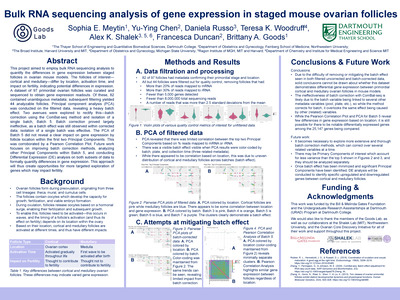
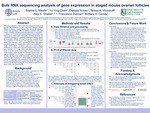
This project aimed to employ bulk RNA sequencing analysis to quantify the differences in gene expression between staged follicles in ovarian mouse models. The follicles of interest—cortical and medullary—differ by location, activation time, and impact on fertility, indicating potential differences in expression. A dataset of 97 primordial ovarian follicles was curated and sequenced to obtain gene expression readouts. Of these, 82 contained unambiguous metadata; subsequent filtering yielded 44 analyzable follicles. Principal component analysis (PCA) was conducted on the filtered data, revealing a heavy batch effect. Two avenues were explored to rectify this—batch correction using the ComBat-seq method and isolation of a single batch, Batch 5. Batch correction proved largely ineffective, as a batch effect was still observed within corrected data; isolation of a single batch was effective. The PCA of Batch 5 did not reveal a clear impact on gene expression by follicle location within the first two Principal Components. This was corroborated by a Pearson Correlation Plot. Future work focuses on improving batch correction methods, analyzing other Principal Components within Batch 5, and conducting Differential Expression (DE) analysis on both subsets of data to formally quantify differences in gene expression. This approach will thus create opportunities for more targeted exploration of genes which may impact fertility.
-
Beyond average: The active processing of information in ensemble perception
2024
Sarah Parigela, Ria Parikh, Kevin Ortego, and Viola Stoermer
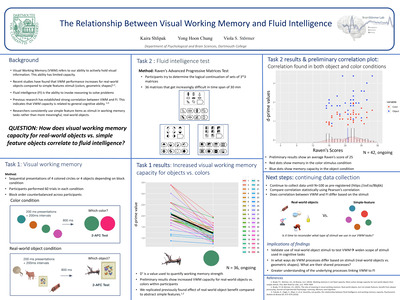
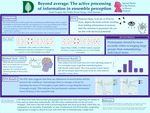
Ensembles can be found in daily life. Surveying faces in a crowd, generalizing states of objects (ex. clean vs. dirty tables in a restaurant)---they all require computing averages. Previous studies have shown that observers can quickly and automatically extract information about means of groups. Through a task of reporting orientations of sets of triangles, we hypothesized that participants should be more accurate when averaging large groups than remembering individual items.